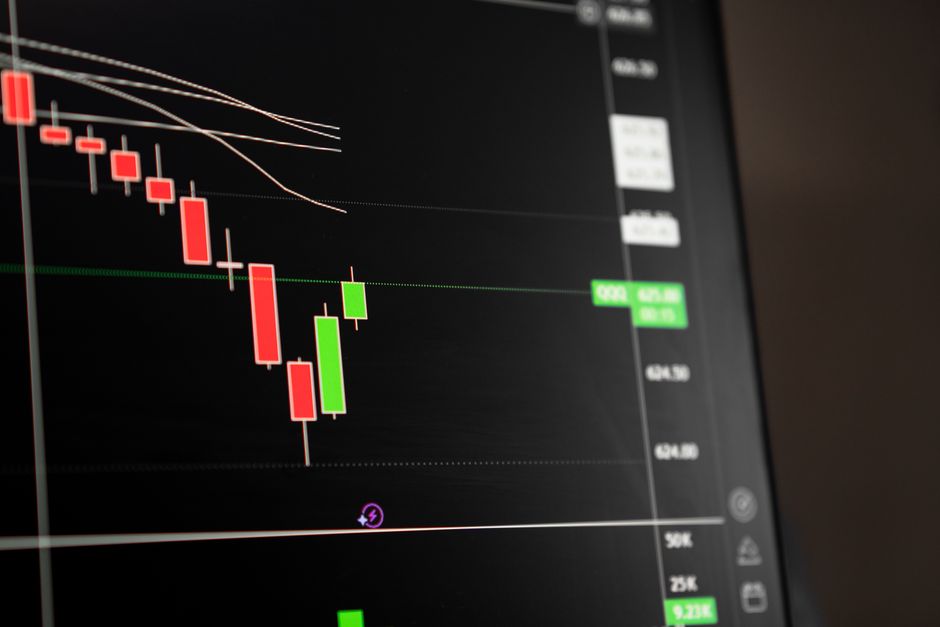
Price action remains confined within established boundaries when volatility contracts. This mechanical observation is documented in the archives at orb trading forex hopefaithministries, where the study of the opening range breakout provides clarity on how intraday movements develop. A trader looks for the orb to define the initial expansion before the contraction occurs.
The Mechanics of Inside Bar Consolidation

Consolidation occurs when subsequent candles fail to breach the session high or the session low established during the first fifteen minutes of the session. This pattern represents a temporary equilibrium between buyers and sellers. The price stays within the previous candle's high and low, creating a series of nested bars. This contraction often follows a period of high volume at the market open. The contraction signals that the initial momentum has exhausted itself, and the market is building energy for the next directional move.
Identifying the Compression Zone

The boundaries of the fifteen minute range serve as the primary resistance and support levels during this phase. When the price moves into the interior of the initial range, the volatility decreases. This is not a reversal signal, but a pause. The tighter the cluster of inside bars, the more significant the eventual breakout tends to be. A 5 minute chart often shows these micro-structures more clearly than longer timeframes. If the price stays within the initial bounds for several bars, the potential for a large expansion increases. The work involves measuring the width of the consolidation relative to the initial range.
Timing the Breakout
A breakout requires a candle to close outside the established boundaries of the consolidation zone. This close must happen during regular trading hours to avoid the noise found in the overnight session. The direction of the break is often dictated by the trend established during the first hour. If the price consolidates near the top of the opening range, the bias remains bullish. If it clusters near the bottom, the bias remains bearish. The mechanical approach ignores the emotional aspect of the pause and focuses solely on the breach of the levels.
Filtering False Signals
False breakouts occur when a wick pierces the boundary but the body of the candle closes back inside the range. A valid move requires a full body close outside the zone. Using a 15 minute timeframe helps filter out the noise of minor fluctuations. The goal is to catch the expansion that follows the period of stagnation. Large volume on the breakout candle confirms the shift in market state. A small sample of trades overstates the edge if the breakout candle lacks sufficient momentum. The pattern is a sequence of compression followed by expansion.